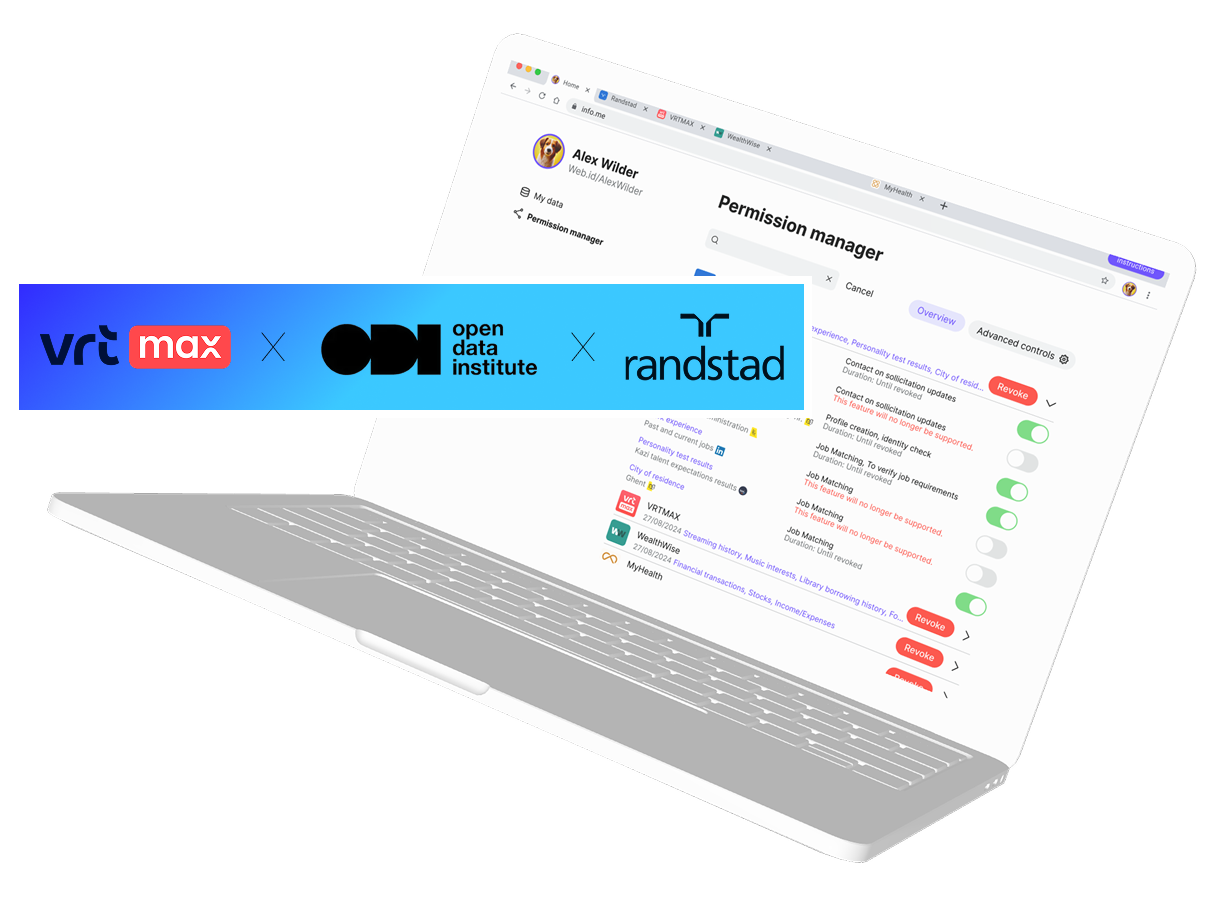
Mockup of a permission manager with the logo of solidlab flanders in front.

Exploring the adoption potential of Personal Data Stores

An end-to-end, mixed-methods study for the Open Data Institute exploring Personal Data Store adoption, spanning quantitative survey research, iterative low-to-high-fi prototyping, expert reviews, and usability testing.

Project Description

To support the Open Data Institute (ODI) in driving the adoption of Personal Data Store (PDS) technology, we investigated the key drivers and barriers to user adoption across four everyday application domains. Partnering with industry leaders including Randstad (HR) and public broadcaster VRT (Media), we explored user attitudes and translated insights into high-fidelity prototypes which were used for usability testing and as a tool to inspire potential clients.

Process

Use Cases Definition  →  Quantitative Survey  →  Low-to-Mid-Fi Prototyping  →  Expert Reviews (Affinity Diagramming)  →  High-Fidelity Figma Prototyping  →  Usability Testing  →  Client Reporting

My role

Responsible for the complete research and prototyping process, from concept development to data analysis and reporting.

    Partners

    The use cases

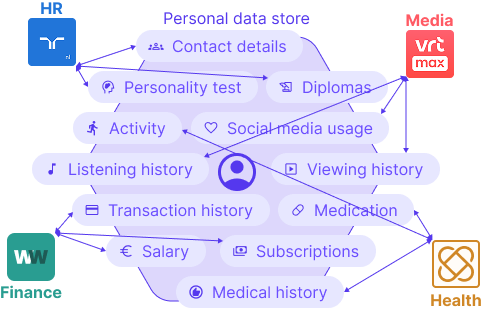
    The project began by defining four promising Personal Data Store (PDS) use cases across distinct application domains. Designed to give users full agency, a PDS allows individuals to centralize their personal data in one secure location, giving them control over who accesses their information. The following four use cases were defined in collaboration with the industry partners:

    • HR (Randstad): Seamlessly match candidates with job opportunities by connecting verified diplomas, location, and career interests directly from their PDS.
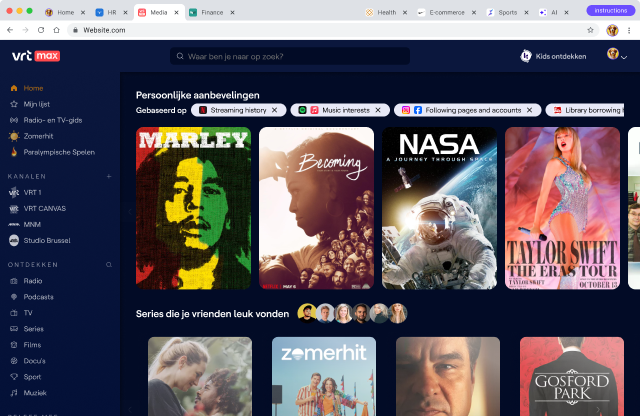
    • Media (VRT): Personalized streaming recommendations by securely leveraging external, cross-platform data like Spotify and viewing histories.
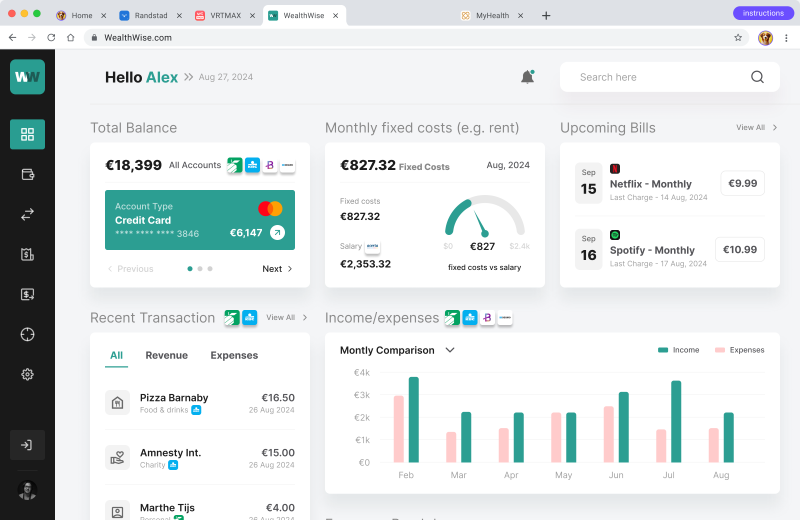
    • Finance: Aggregated multi-bank and investment data into a single, secure financial dashboard owned entirely by the user.
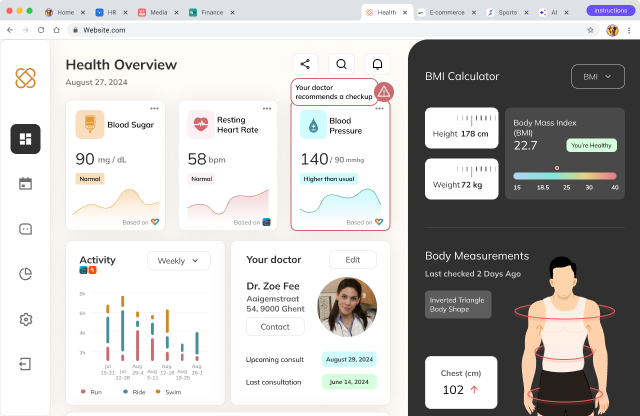
    • Health: Enabled secure sharing of wearable and activity data with medical professionals for proactive, personalized patient monitoring.
    Visualization of a personal data store central in the image containing various data types surrounded by four applications: HR, Media, Finance and Health.

    Survey design

    To gain initial insights into users’ adoption potential and willingness to share data, we conducted a large-scale survey with 2,335 respondents, in which participants evaluated the four Personal Data Store use cases based on written scenario descriptions.

    Survey results

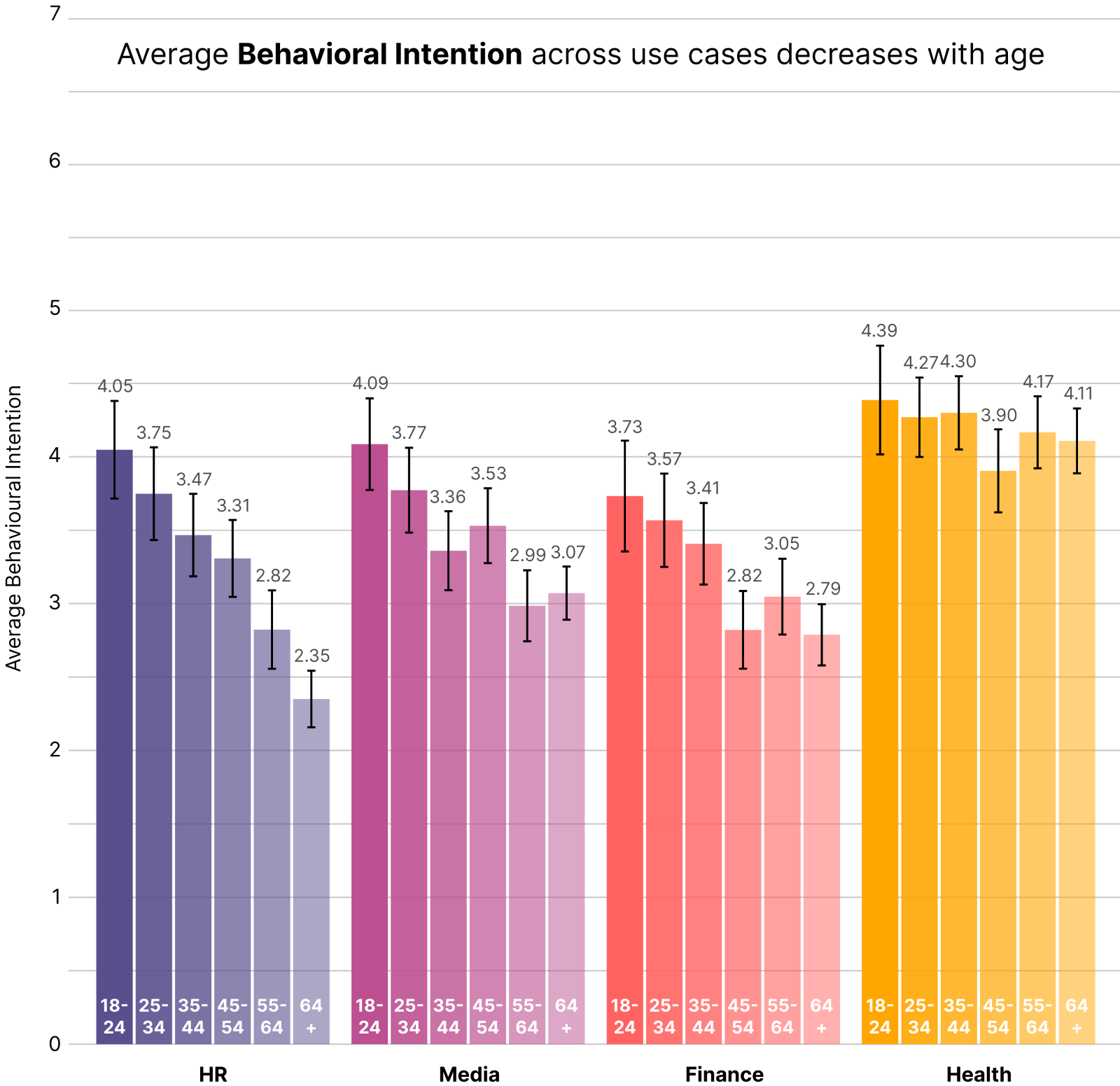
    The survey revealed that the Health use case showed the highest adoption potential among respondents. In contrast, the likelihood of adopting Personal Data Stores decreased significantly with age across all domains, as illustrated in the image below.

    Graph with on the x axis the four use cases divided in age groups and on the y-axis users average behavioural intention. The average behavioural intention across the use cases decreases with age.

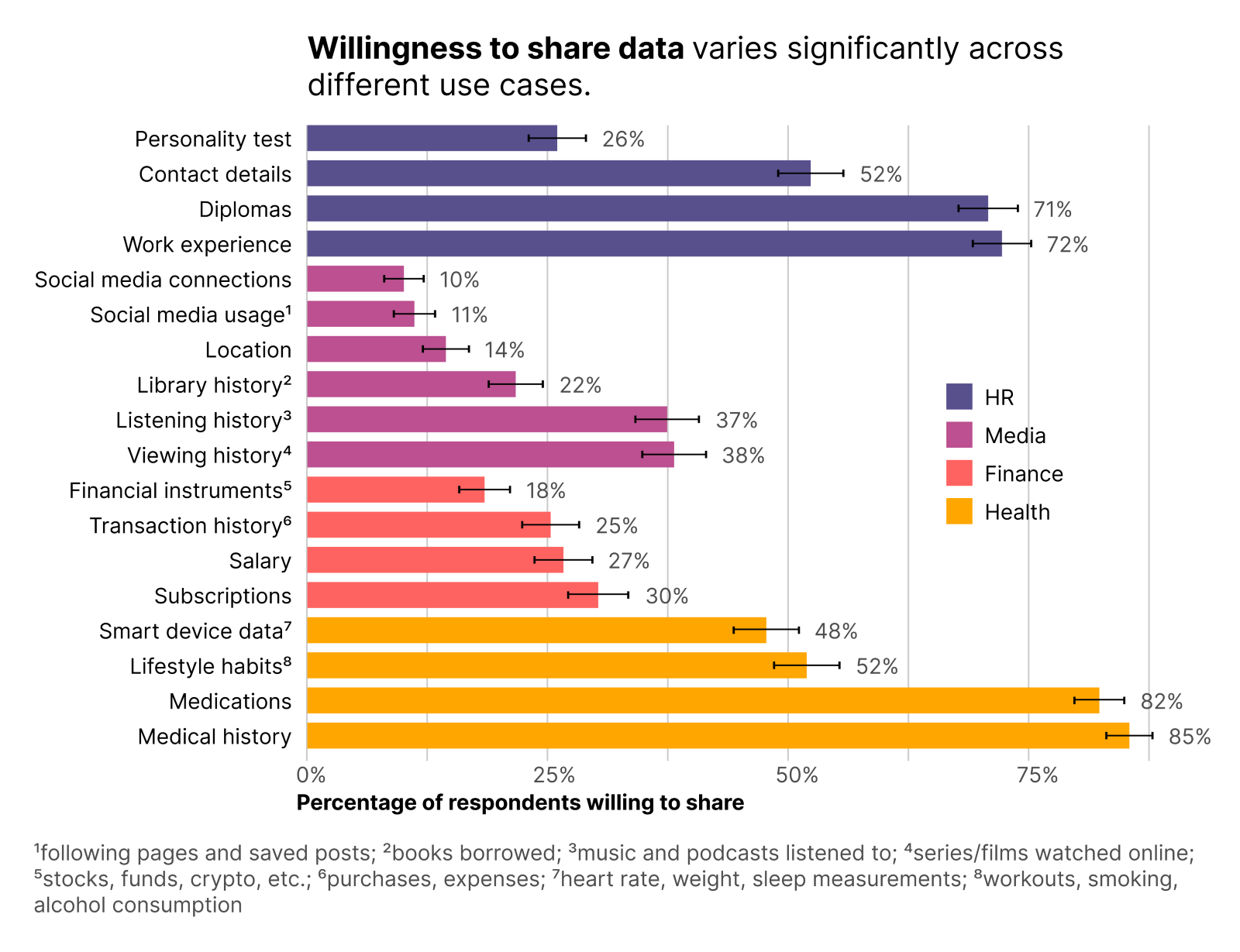
    Willingness to share data differed strongly across domains. Remakably, Health data was shared most readily (over 80% for medical history and medication), followed by HR data such as diplomas and work experience (around 70%). Media and especially Finance data were met with more hesitation, particularly for sensitive details like transactions or social media activity. Overall, users were more willing to share data when its relevance and benefit were clear.

    Bar chart with on the x-axis the percentage of users willing to share a certain data type and on the y-axis the different data types.
    USE CASEs definition
    & Survey
    Prototyping & Expert review

    First iteration

    Following an initial sketching and wireframing phase, the first iteration of the Personal Data Store and its use case interfaces was developed in Figma, leveraging existing design systems to accelerate the process.

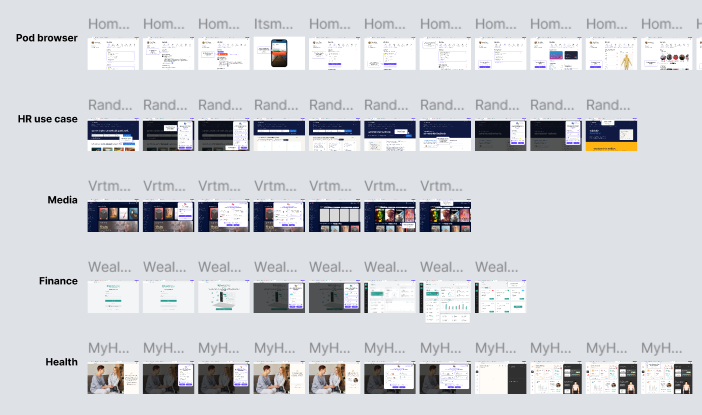
    Screenshot from figma wireframes.
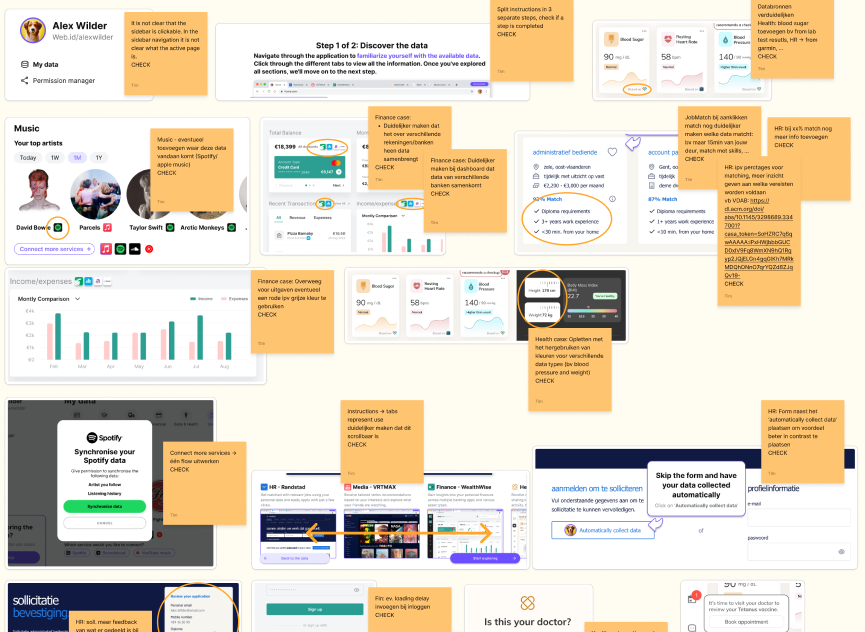
    Screenshot from an affinity diagram made in Figjam.

    Expert reviews

    Before user testing, the prototype was refined through a series of expert reviews with ten professionals from fields including UX design, product development, and privacy. Each expert navigated the prototype using a guided walkthrough. Their observations were organized through in an affinity diagram, which helped identify recurring themes and actionable insights.

    Prototype v2

    These findings from the expert reviews directly informed the second iteration of the interactive prototype, which was used for the user testing.

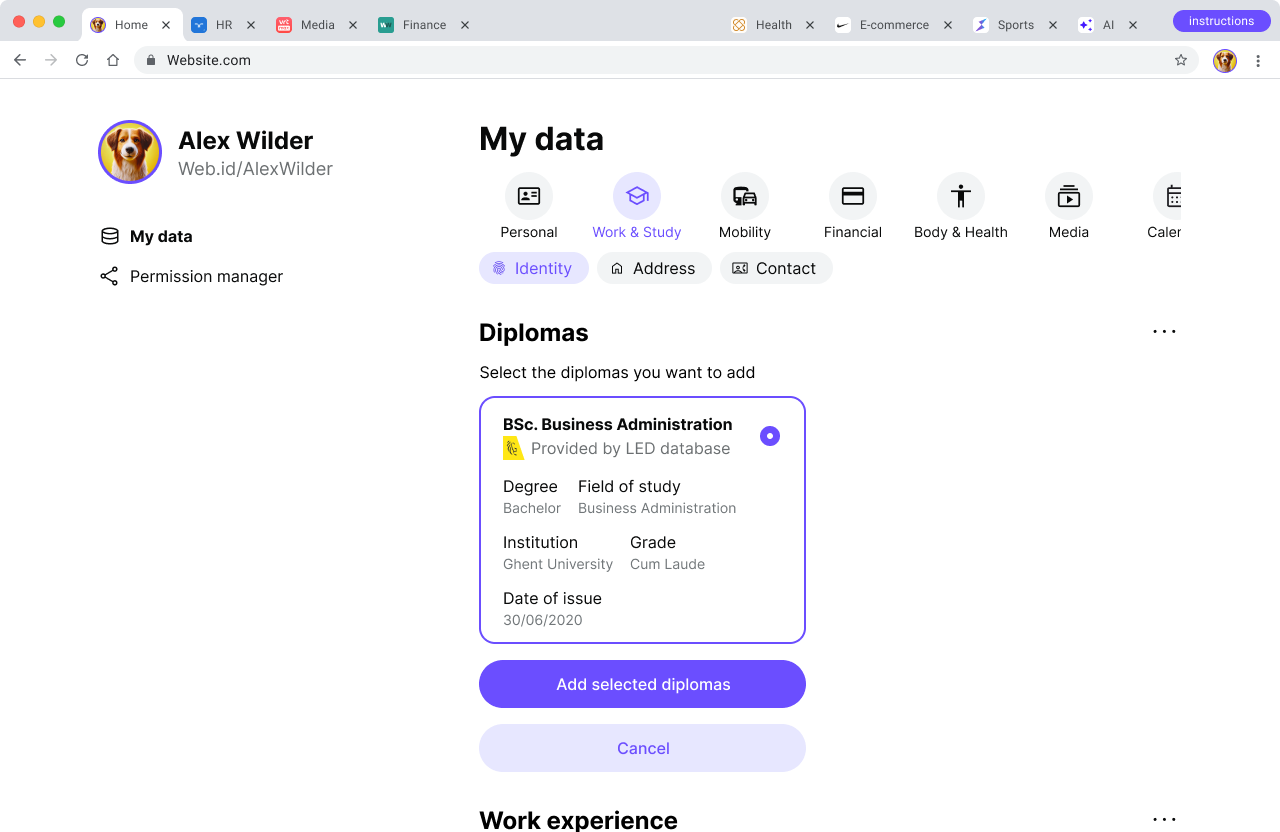
    Screenshot of the Personal Data Store interface.

    Personal Data Store interface

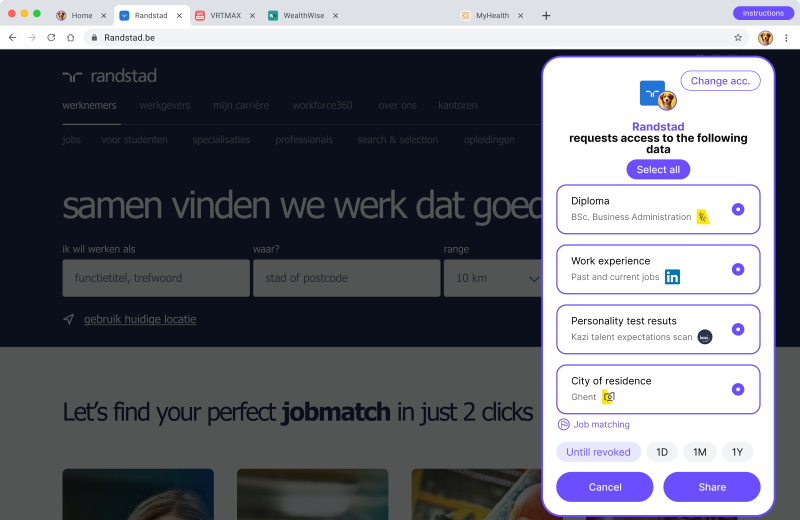
    Screenshot of the HR use case.

    HR

    Screenshot of the Media use case.

    Media

    Screenshot of the finance use case.

    Finance

    Screenshot of the health use case.

    Health

    Methodology

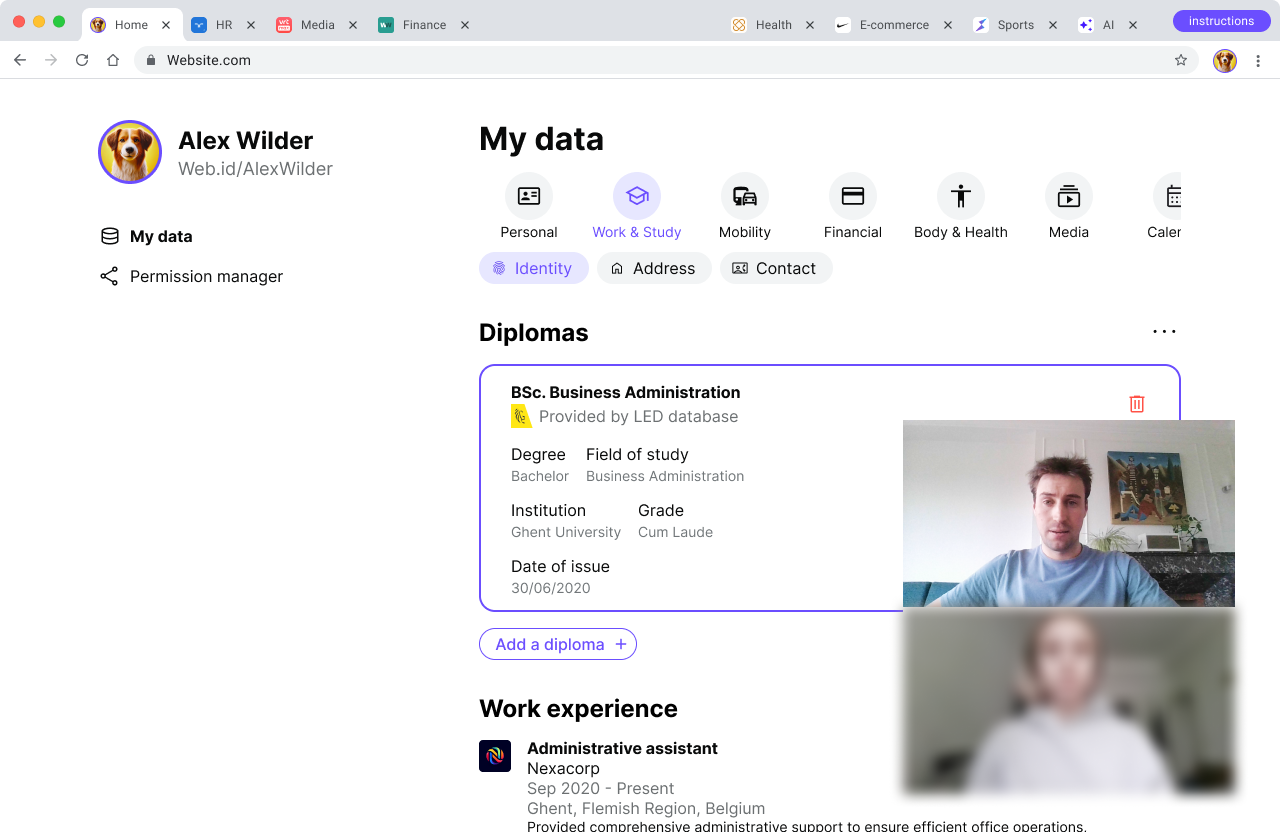
    To evaluate the refined prototype, 17 participants took part in one-hour online sessions. Each session followed a structured flow combining think-aloud walkthroughs, a semi-structured interview, and a short post-test survey.

    User profile page showing Alex Wilder's diploma in Business Administration and work experience with video call overlay.

    Qualitative insights

    Qualitative feedback revealed a generally positive reception across all four use cases. Participants valued efficiency and simplicity in HR and Health scenarios, while trust and perceived relevance shaped their attitudes toward Media and Finance. The Personal Data Store interface itself was praised for its clarity and centralization, though some users voiced concerns about security and information overload. Overall, the tests confirmed that hands-on interaction with a prototype increased both understanding and acceptance of Personal Data Stores.

    “Interesting to have that in one location instead of having 456 different apps for it."

    VS

    “If they have the one password from that platform, they can get to all yourdata, but really everything. To your medical records, to your banking details, to your music preferences.Where you live, what newspaper you read. Yeah, you do not want that.”

    Quantitative insights

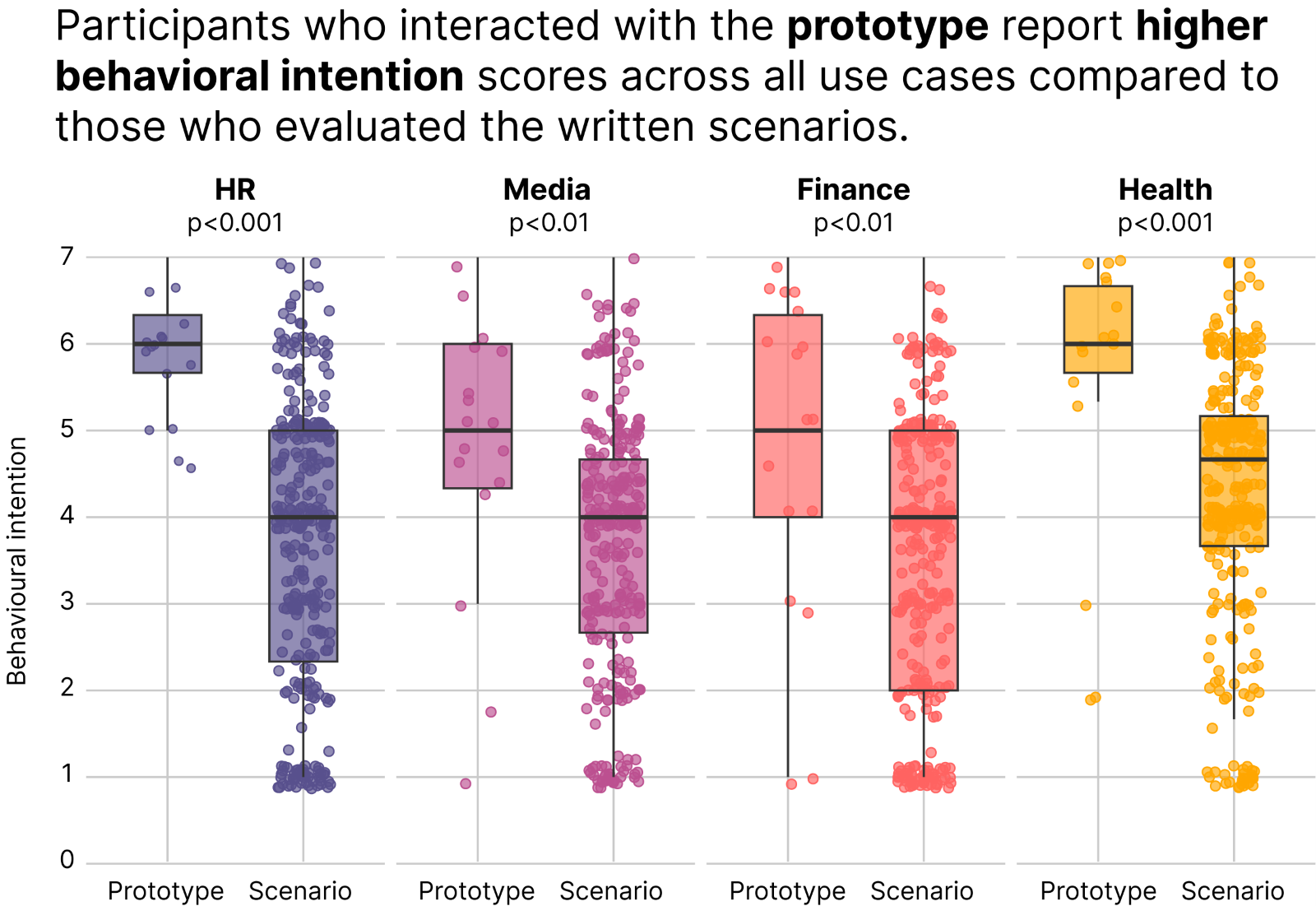
    Quantitative insights showed that participants who interacted with the prototype reported significantly higher behavioural intention and willingness to share data compared to those who only evaluated written scenarios. This increase was particularly strong for the HR and Health domains, confirming the value of making abstract concepts like data vaults tangible through interactive design. Additionally, also users' willingness to share increased when they interacted with the prototype.

    Boxplots comparing users' behavioural intention across the four use cases between users that used the prototype and those that evaluated the use cases based on a written scenario.
    User testing
    Conclusion

    Key takeaways

    • Hands-on interaction builds trust: Tangible prototypes made the concept of Personal Data Stores more understandable and appealing.
    • Health and HR show strongest potential, as users clearly saw practical benefits like easier administration and data sharing.
    • Security and trust remain key barriers: Users feared over-centralization and preferred trusted or government-backed providers.
    • Convenience vs. control tension: Users value automation and personalization only when they can see and manage how data is used.

    Practical impact

    The findings highlight the importance of designing for gradual trust-building; starting with low-stakes data sharing, clearly communicating the purpose of each request, and emphasizing transparency and data minimization. Above all, introducing Personal Data Stores should follow a “show, don’t tell” approach: offering tangible, well-designed experiences that help users understand the value of PDSs in practice, build confidence, and ultimately drive adoption.

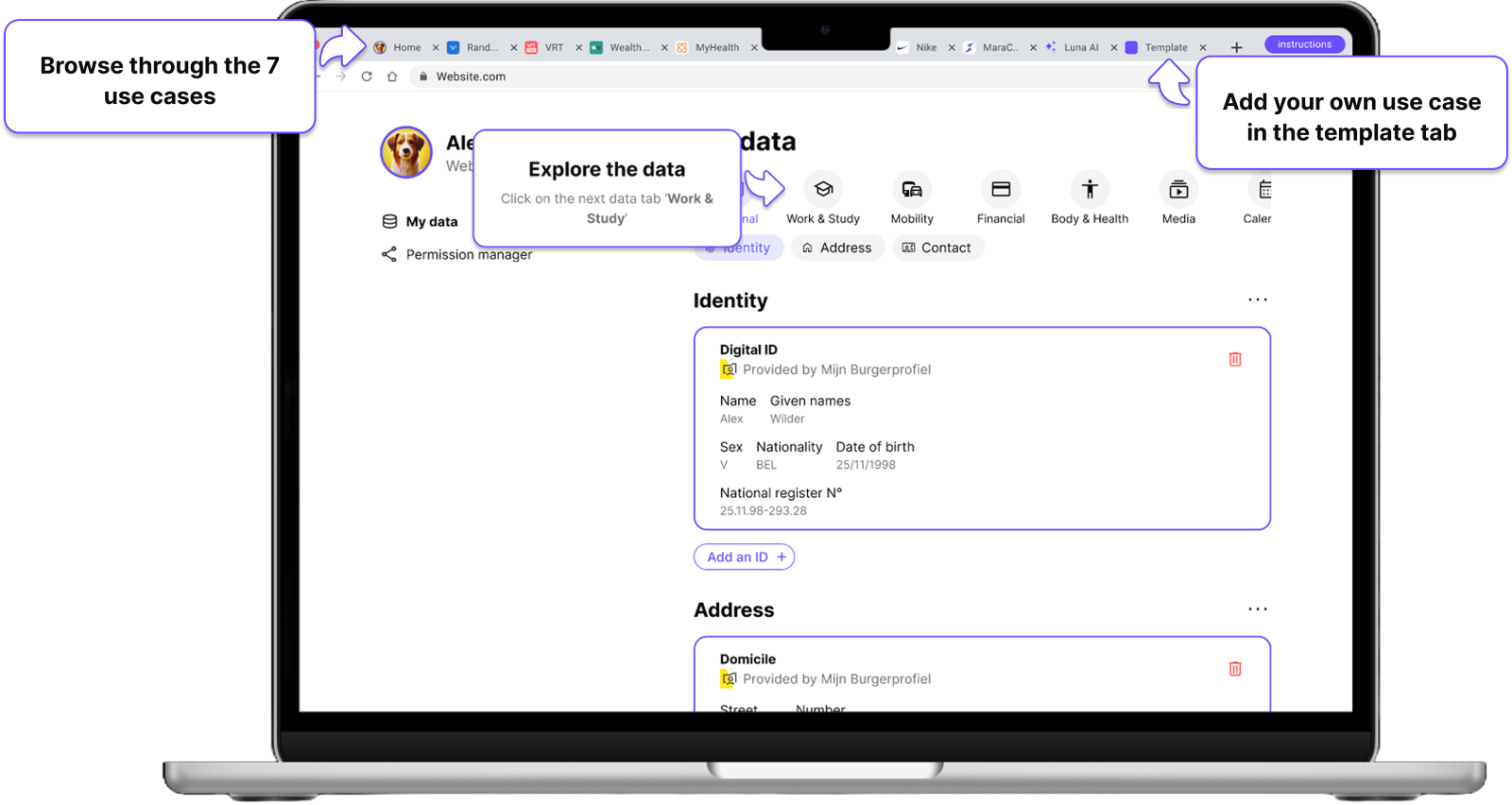
    The final prototype now serves as an active business development and educational tool for the Open Data Institute. It is used to align stakeholders, inspire new use cases, and provide software teams with a library of reusable, expert-reviewed design patterns for consent requests, dashboards, and permission management. Highlighting the scalable nature of this framework, three additional use cases have already been added to the publicly available platform:

    • An e-commerce flow showing how a shoe store could auto-fill checkout forms using basic user data.
    • A sports coaching app integrating fitness and personal data to tailor training plans and playlists.
    • A PDS-powered agentic AI demonstrating the future potential of intelligent, data-driven assistance.
    Mockup of the interactive figma prototype displaying the personal data store.Try the prototype yourselfopen_in_new
    Discover more projectsarrow_forward